
Introduction: The Water You Don’t See
When you drink a glass of water, you know exactly how much you’re consuming.
But what if I told you that the real water you use daily is not what you drink, but what you eat, wear, and buy?
That invisible water is called your water footprint.
From your morning cup of tea to the shirt you wear and the rice on your plate—every product carries a hidden cost in water. And in a world already facing water scarcity, understanding this concept is no longer optional… it’s essential.
What is Water Footprint?
A water footprint is the total amount of freshwater used directly and indirectly by an individual, organization, or product throughout its entire lifecycle.
It includes:
- Water used in production
- Water used in processing
- Water used in transportation
- Water used in consumption
👉 In simple terms:
Everything you use has already used water before reaching you.
The Three Types of Water Footprint
To truly understand water usage, we divide it into three categories:
🔵 1. Blue Water Footprint
This is the visible and most commonly understood type of water usage.
It includes freshwater taken from:
- Rivers
- Lakes
- Groundwater (borewells)
📌 Used in:
- Irrigation systems
- Industrial processes
- Cooling towers
- Domestic water supply
🏭 Industrial Example:
In industries like power plants or manufacturing units, blue water is heavily used for:
- Boiler feed water
- Cooling systems
- Cleaning processes
👉 Overuse of blue water leads to:
- Groundwater depletion
- Dry rivers
- Water conflicts
🌱 2. Green Water Footprint
This is rainwater stored in soil, absorbed by plants.
📌 Used in:
- Agriculture (rain-fed crops)
- Forestry
- Natural ecosystems
🌾 Example:
When crops grow using rainfall instead of irrigation, they rely on green water.
👉 This is the most sustainable form of water use, but:
- It depends heavily on climate patterns
- It is affected by climate change
⚫ 3. Grey Water Footprint
This is the most misunderstood but critical category.
It represents:
👉 The amount of freshwater required to dilute pollutants to meet environmental standards.
📌 Example:
If a factory releases polluted water, grey water footprint tells us:
“How much clean water is needed to make it safe again?”
🧪 Includes:
- Industrial wastewater
- Agricultural runoff (fertilizers, pesticides)
- Domestic sewage
👉 High grey water = high pollution impact
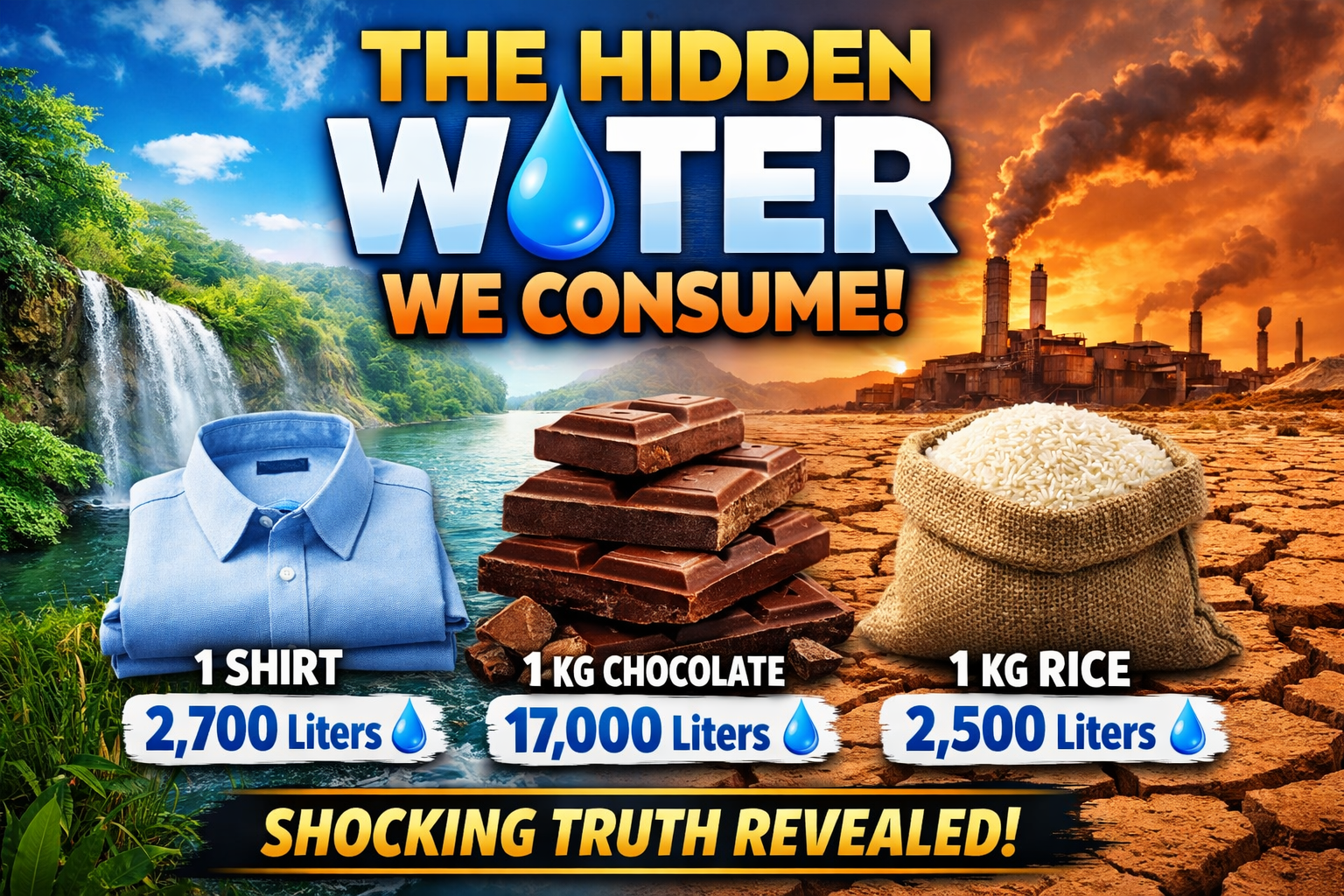
Shocking Truth: Hidden Water in Everyday Products
Let’s look at some real numbers that might change how you see your daily life:
👕 Cotton Shirt
- Requires 2,700 liters of water
- That’s enough drinking water for one person for 2.5 years
🍫 Chocolate (1 kg)
- Requires 17,000 liters of water
- One of the highest water footprint products
🍚 Rice (1 kg)
- Requires 2,500 liters of water
- Staple food, but water-intensive
What Does This Mean?
You’re not just consuming products…
👉 You’re consuming water embedded inside them
This is called:
“Virtual Water”
And your lifestyle determines how much of it you consume.
Why Water Footprint Matters More Than Ever
1. 🌊 Environmental Sustainability
Water is not unlimited.
- Only 2.5% of Earth’s water is freshwater
- Less than 1% is accessible for human use
Overuse leads to:
- Droughts
- Ecosystem damage
- Loss of biodiversity
👉 Managing water footprint helps protect natural resources.
2. 🏭 Corporate Responsibility & ESG Compliance
Today, industries are under pressure to become sustainable.
Water footprint plays a major role in:
- ESG (Environmental, Social, Governance)
- Sustainability reporting
- Regulatory compliance
📊 Standards that consider water footprint:
- LEED (Leadership in Energy and Environmental Design)
- IGBC (Indian Green Building Council)
Companies now track:
- Water usage per product
- Wastewater discharge
- Recycling efficiency
👉 Sustainable companies are more trusted and future-ready
3. 🛒 Informed Consumer Choices
Consumers are becoming smarter.
People now ask:
- Is this product sustainable?
- How much water did it consume?
- Is it eco-friendly?
👉 Your choices can:
- Reduce environmental impact
- Influence companies
- Promote sustainable production
How Water Footprint is Calculated
Water footprint considers entire lifecycle analysis (LCA):
🧾 Formula (Conceptual):
Water Footprint = Blue + Green + Grey Water
But in real scenarios, it includes:
- Raw material extraction
- Processing stages
- Supply chain
- Transportation
- Usage phase
Industrial Perspective (Important for You)
Since you work in industrial/engineering space, here’s a deeper view:
🔧 Key Water Consumers in Industry:
- Cooling towers
- Boilers
- Cleaning systems
- Chemical processing
⚠️ Major Issues:
- High blowdown losses
- Inefficient reuse systems
- Untreated discharge
Practical Example: Cooling Tower
A cooling tower:
- Uses blue water for cooling
- Loses water via evaporation
- Generates blowdown (grey water)
👉 Optimizing cycles of concentration can:
- Reduce water consumption by 20–30%
How to Reduce Water Footprint (Practical Guide)
🏭 For Industries:
1. Water Recycling & Reuse
- Use treated wastewater for cooling
- Install Zero Liquid Discharge (ZLD) systems
2. Optimize Processes
- Reduce leakages
- Improve efficiency in boilers and cooling towers
3. Rainwater Harvesting
- Convert green water into usable water
4. Smart Monitoring
- Install flow meters
- Use IoT for tracking usage
🏠 For Individuals:
1. Conscious Consumption
- Buy fewer fast fashion clothes
- Reduce food waste
2. Dietary Choices
- Reduce high water footprint foods (like excessive meat & processed items)
3. Save Daily Water
- Fix leaks
- Use efficient fixtures
The Future Risk: Water Crisis
India is already facing:
- Falling groundwater levels
- Seasonal water shortages
- Increased demand due to population
👉 By 2030, demand may exceed supply significantly.
If we ignore water footprint:
- Industries may shut down
- Agriculture may suffer
- Daily life will be affected
Innovation is the Key
The future lies in:
🔬 Technologies:
- Water-efficient crops
- Advanced wastewater treatment
- AI-based monitoring systems
🏭 Industrial Innovations:
- Closed-loop water systems
- Dry cooling technologies
- Membrane filtration
A Thought to Reflect
Next time you:
- Wear a shirt 👕
- Eat rice 🍚
- Enjoy chocolate 🍫
Ask yourself:
👉 “How much water did this really cost?”
Because every drop matters.
Conclusion: Small Awareness, Big Impact
Water footprint is not just a technical concept.
It’s a powerful lens to understand:
- How we consume
- How we produce
- How we impact the planet
Reducing it doesn’t mean sacrificing comfort…
It means making smarter, more responsible choices.
Final Message
💧 “The future of water depends on the choices we make today.”
Whether you are:
- An engineer
- A business owner
- A student
- Or a consumer
👉 You have the power to reduce your water footprint.